Four tests. 30 minutes. Your strength, power and balance, measured.
16%
Higher risk of death from any cause for every 5 kg of grip strength lost.
PURE study · 140,000 adults
84%
Higher risk of death over seven years for adults who could not stand on one leg for 10 seconds.
1,702 adults aged 51 to 75
3.5%
Leg power lost each year after 65. Strength falls by 1 to 2% a year.
Healthy adults aged 65 to 89
23%
Fewer falls in older adults who do exercise programs.
Cochrane review · 108 trials
Strength, power and balance all decrease with age, and all three respond to training. Know your numbers, then train the one that needs it most.
These tests are markers, not a verdict. The studies show strong associations. They do not show that a low result causes illness.
Strength, power and balance are three of the best-studied physical markers of healthy ageing. People with greater muscle strength tend to live longer and stay independent longer, and have a lower risk of falls, heart disease and stroke.
All three decrease with age. Power goes first: it starts to fall from about age 40, and strength from about age 50. All three also respond to training, at any age.
The Physical Assessment shows you
01
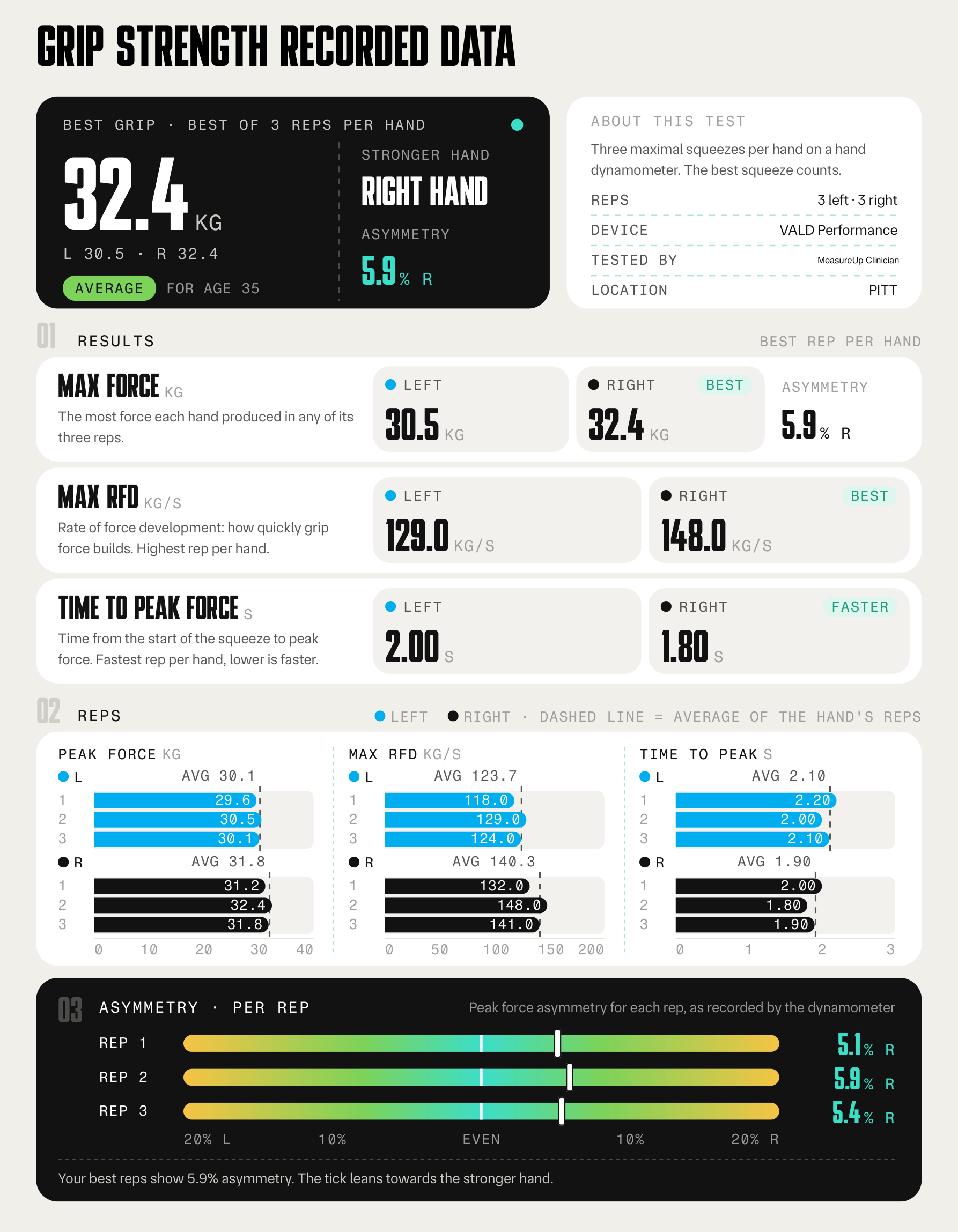
A simple marker of whole-body strength
Why it matters
In almost 140,000 adults in 17 countries, grip strength predicted death from any cause more strongly than systolic blood pressure.
You squeeze the VALD DynaMo, a digital dynamometer, as hard as you can with each hand.
More about the grip strength test →
From your report
02
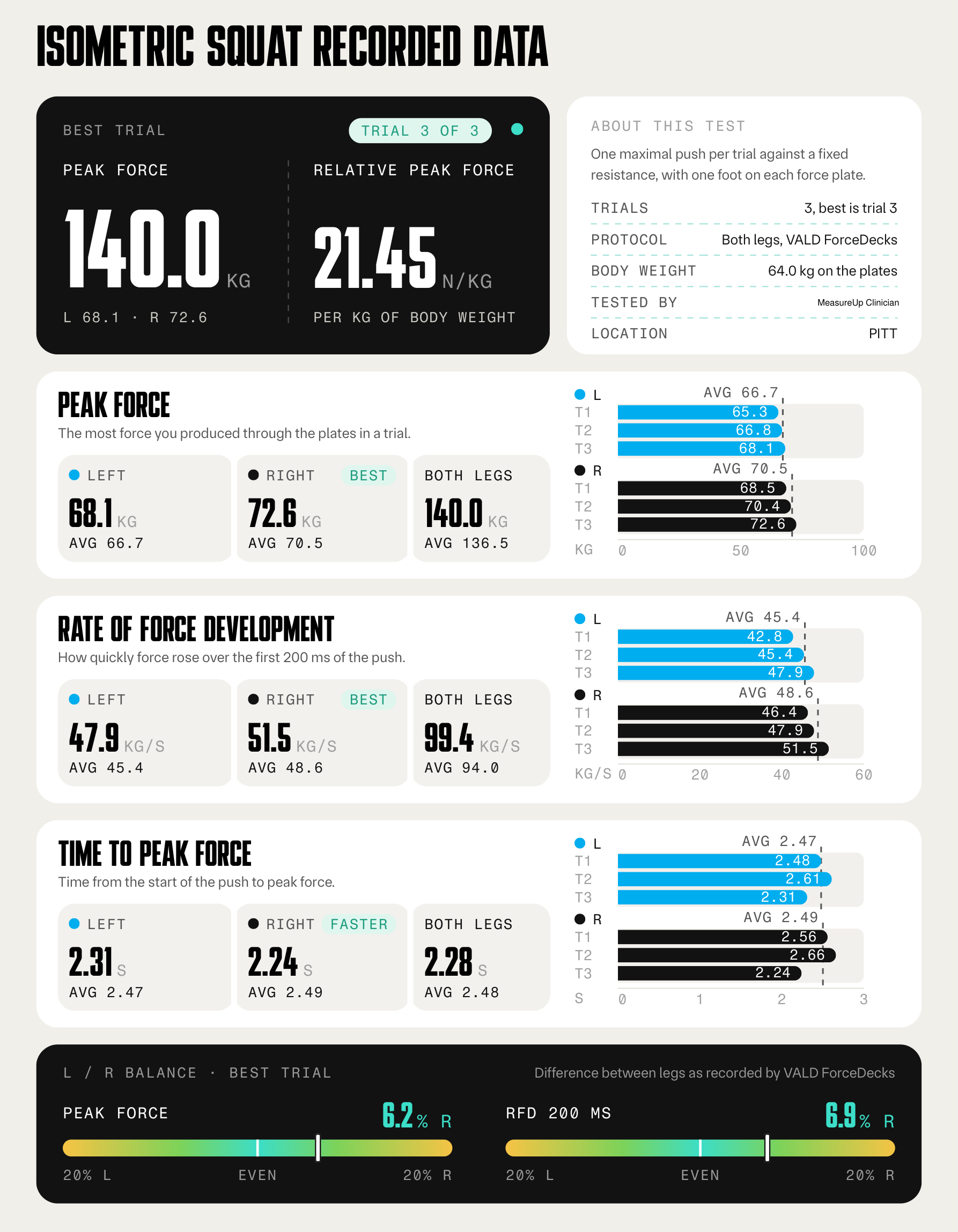
Your maximum leg strength
Why it matters
Leg strength gets you out of a chair, up the stairs and off the mark in sport. In adults in their 70s, lower thigh strength was associated with a higher risk of death. Muscle size was not.
Low muscle strength is also the key feature of sarcopenia, the age-related loss of muscle that is linked to falls and loss of independence.
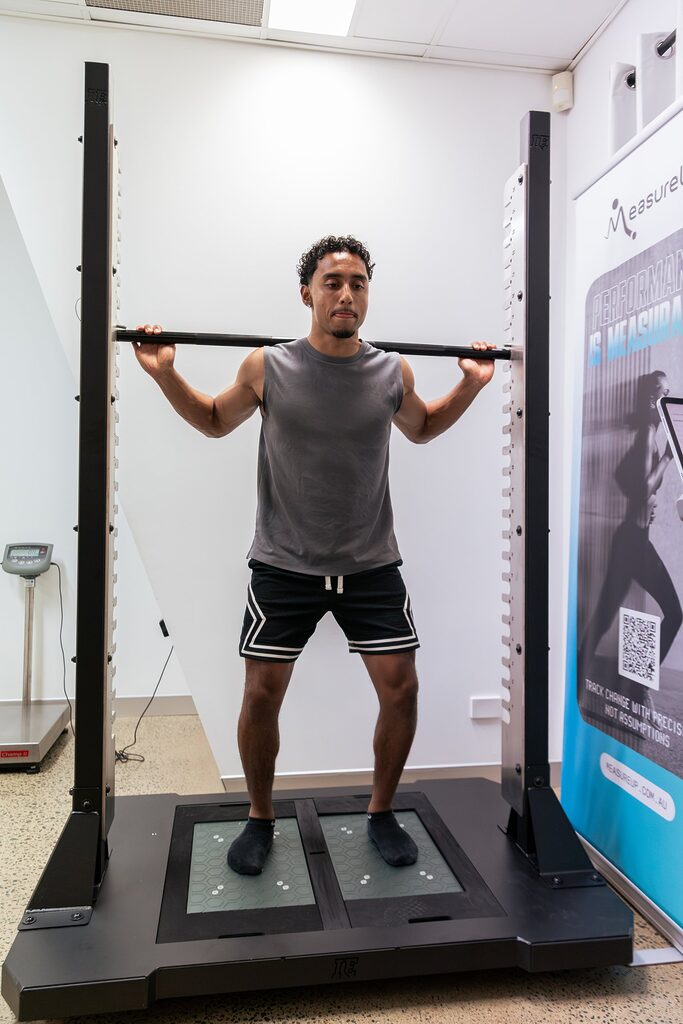
You stand on force plates and push as hard as you can against a fixed bar. The bar does not move.
This test has no age comparison. Your result is your own baseline to beat.
From your report
03
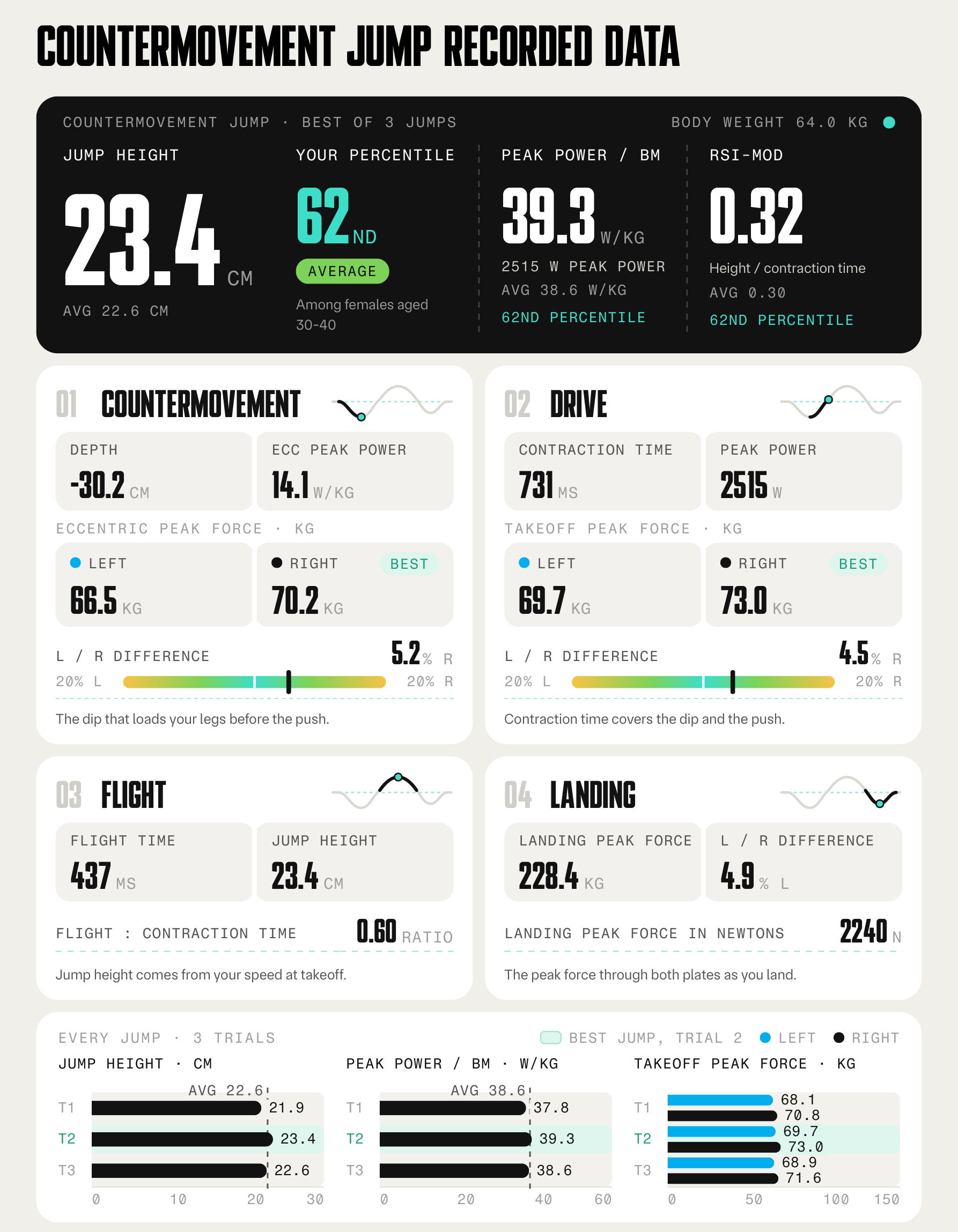
Your power: force, produced fast
Why it matters
Power decreases earlier and faster than strength. In older adults, leg power has a closer link to mobility than leg strength.
Studies of middle-aged and older adults also link low muscle power to a higher risk of death.
You jump as high as you can from the force plates. The plates record every phase, from the dip to the landing.
From your report
04
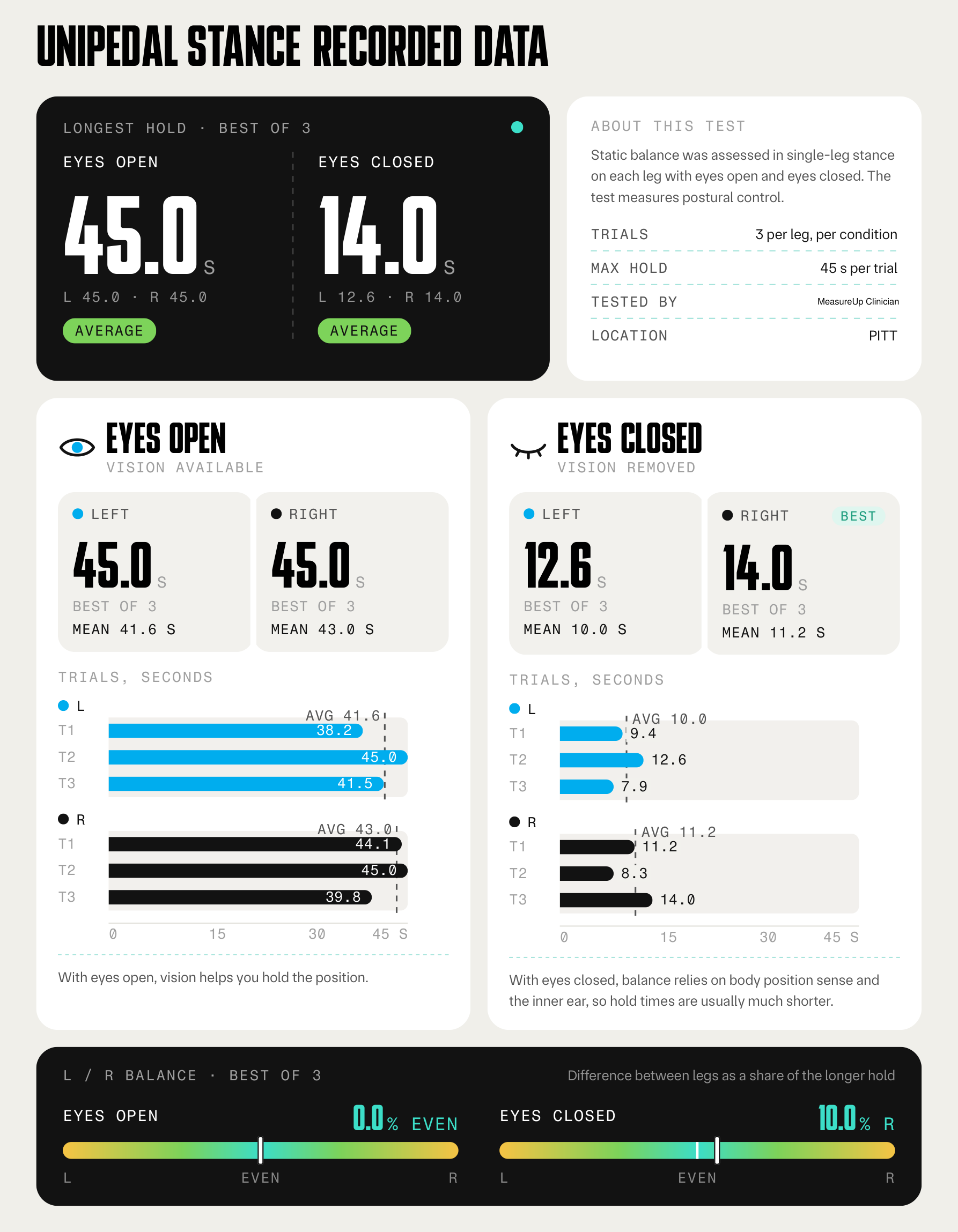
Your stability on one leg
Why it matters
Balance needs your muscles, nerves, eyes and inner ear to work together. In a study of 1,702 adults aged 51 to 75, those who could not stand on one leg for 10 seconds had an 84% higher risk of death over the next seven years.
In young athletes, poor single-leg balance is associated with more ankle sprains.
You stand on one leg and we time how long you hold it. You do it on each leg, with your eyes open and with your eyes closed.
From your report
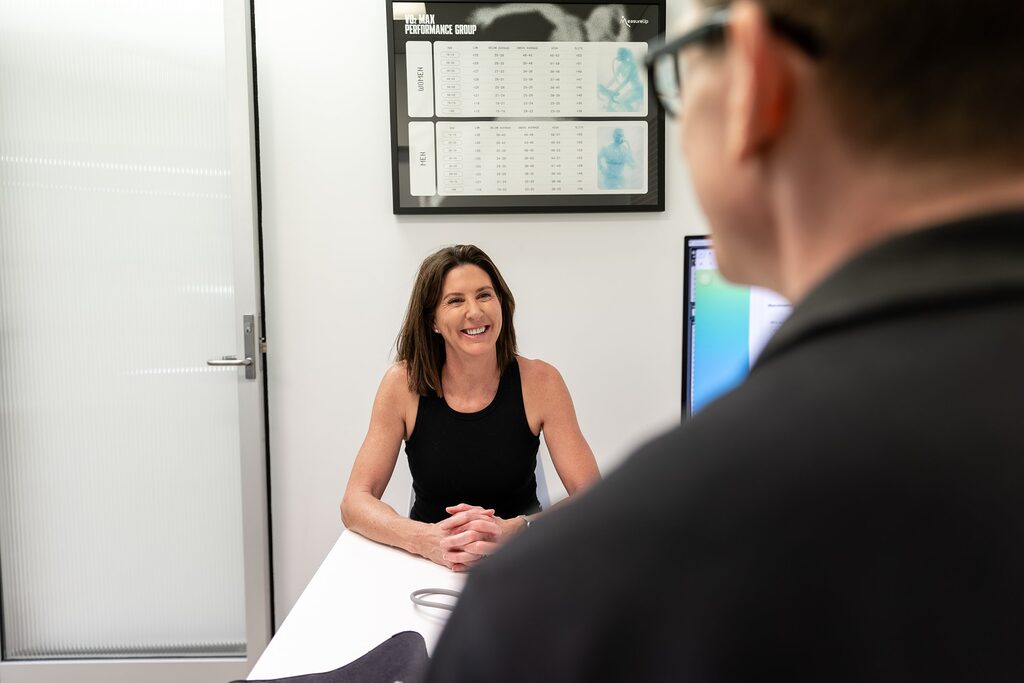
Four tests with an accredited exercise physiologist: grip strength, isometric squat hold, countermovement jump and balance. One report.
Available at our Sydney, Brisbane and Melbourne labs.
30 minutes.
The assessment takes 30 minutes.
To prepare
The assessment takes 30 minutes.
To prepare
Your Physical Assessment report
One report covers all four tests. Each test has a results page and a detail page. Select a page to see it at full size.

02
Isometric squat hold
Peak force, force per kilogram, speed of force and left–right balance for every trial.
Built for tracking
Every result is stored digitally. Retest every 12 weeks and see real, measured change.
Who is it for?
Adults who want to keep their strength, mobility and independence as they age.
People who start or return to exercise and want a clear baseline.
Gym users and athletes who want measured strength, power and progress.
People who think their strength or balance has decreased and want data.
Anyone who tracks body composition and fitness and wants the full picture.
Frequently asked questions
30 minutes for all four tests.
No. Each test is a maximum effort for you. Your result is compared with people of your age, not with athletes.
Wear clothes you can squat and jump in. Skip heavy leg and grip training for 24 hours before. Tell us about any recent injury.
One report with your results for all four tests, including left–right differences and age-based comparisons.
Grip strength and jump results are compared with people of your age and sex. Balance is compared with people of your age. The isometric squat hold has no published comparison yet, so it is your own baseline.
The grip strength test is one of the four tests in the Physical Assessment. The assessment adds leg strength, power and balance.
Every 12 weeks is a good interval to see change from training.
No. It is a physical performance assessment, not a diagnosis. Talk to your doctor about any health concern.
References