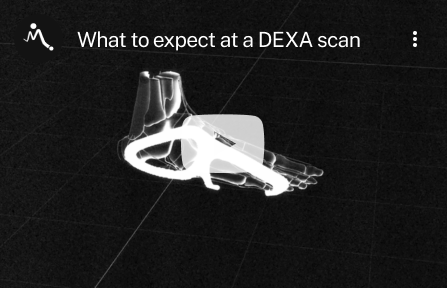
A Bone Mineral Density (BMD) scan assesses bone health by measuring bone density and comparing your results to healthy reference ranges, providing valuable information for your GP or healthcare provider to support informed clinical decisions.”
Literally translating to “porous bone,” Osteoporosis is a bone disease that occurs when the body loses too much bone, makes too little bone, or both. As a result, bones become weak and may break from a fall or, in serious cases, from simple actions such as sneezing or minor bumps. It is known as the “silent disease” because of its symptomless progression and often develops unnoticed over several years, with no symptoms or discomfort, until a bone fractures. That’s why early detection is so crucial to mitigating its potential impact.
[ 00:00 ]
dexa scan:
The key to detection
Early detection of osteoporosis is important because it allows for timely intervention, potentially reducing the risk of debilitating fractures. Successful treatment can dramatically increase the quality of life for those who may be predisposed to bone loss.
DEXA stands for dual energy x-ray absorptiometry (DEXA or DXA).
This is where the DEXA (Dual Energy X-ray Absorptiometry) scan comes into play. The DEXA scan is a state of the art imaging device that is currently the most widely accepted and extensively used method to measure bone mineral density (BMD).
This painless and non-invasive test uses a low-dose x-ray to measure bone mass and area. It is quick, scans typically taking only 2-5 minutes. The amount of radiation exposure is very low – less than half of daily background radiation one receives each day or less than 10% of normal chest X-ray.
A bone density scan is a safe, low-dose X-ray that measures the density of your bones, typically at the hip and lumbar spine. The scan itself takes just 2 minutes, with the full appointment lasting around 15 minutes. A referral from your doctor is required, and you may be eligible for a Medicare rebate—ask your GP for details. These scans are particularly important for postmenopausal women, as they help detect osteoporosis early, reducing the risk of future fractures and bone loss
From your mid-40s, muscle and bone are quietly lost and the bathroom scale won’t show which is lost. This DEXA assessment measures both in a single visit.
Your appointment includes a full body composition scan (lean mass, fat mass, visceral fat), a bone density scan (T-score and Z-score for your hip and spine) and a one-on-one consult with an accredited exercise physiologist who explains your body composition results in plain language and what to do next. You only require a bone density scan every two to five years depending on your previous result. A GP referral is required for this appointment and your GP will discuss your bone density results.
Most people don’t need to change their daily routine before a DEXA scan. Our team will assist you when you arrive. Please arrive 10 minutes prior to your scheduled session. We recommend wearing comfortable clothing with no metal like jeans, zippers and underwire or metal clips in your bra - gym and exercise clothes are ideal.
For more information visit our FAQ page below.
Most people don’t need to change their daily routine before a DEXA scan. Our team will assist you when you arrive. Please arrive 10 minutes prior to your scheduled session. We recommend wearing comfortable clothing with no metal like jeans, zippers and underwire or metal clips in your bra - gym and exercise clothes are ideal.