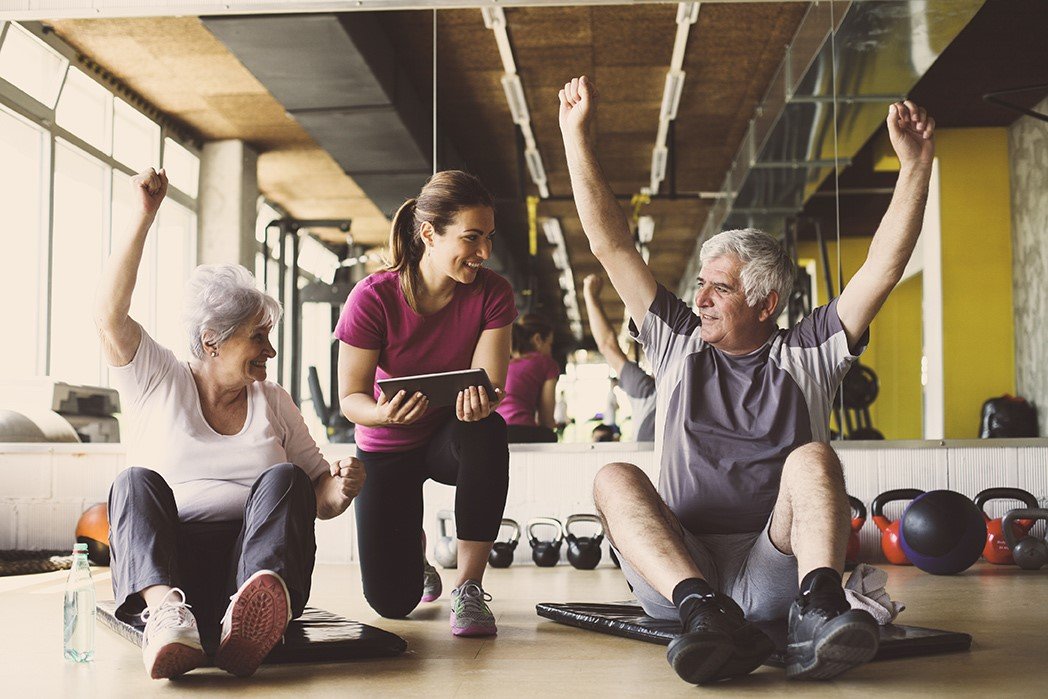
What if ageing well had less to do with slowing down and more to do with getting stronger? Resistance training is emerging as one of the most powerful tools we have to preserve health, independence, and vitality as we age.
How it Works
Ageing is often accompanied by a gradual loss of muscle mass, strength, and physical function. Left unchecked, this decline increases the risk of falls, metabolic disease, and loss of independence. Luckily, resistance training is an intervention that can effectively slow, and even reverse, this trajectory.
A landmark position statement published in Ageing Research Reviews concluded that resistance training consistently improves muscle strength, muscle mass, and functional capacity in older adults, even in those starting later in life (Fragala et al., 2019). Importantly, these benefits extend beyond appearance or gym performance — they directly influence how well people move, balance, and perform daily tasks.
Resistance training also plays a critical role in metabolic health. Muscle is a major site for glucose disposal, and preserving muscle mass improves insulin sensitivity and energy regulation. A 2022 review in Sports Medicine highlighted that regular resistance training improves neuromuscular function, metabolic health, and physical resilience — all key pillars of healthy ageing (Morton, Traylor, Weijs, & Phillips, 2022).
The benefits are not limited to the body. Strength training is increasingly linked to mental and cognitive health. A meta-analysis in JAMA Psychiatry found that resistance exercise significantly reduced depressive symptoms across a wide range of populations, independent of improvements in aerobic fitness (Gordon et al., 2018). Meanwhile, a systematic review reported that resistance training was associated with improvements in cognitive function in older adults — particularly executive function and memory (Li et al., 2018). Together, these findings suggest that lifting weights does not just strengthen muscles — it supports brain health, mood, confidence, and long-term independence.
The Dumbbells Are in Your Hands
For healthy ageing, aim for 2–3 resistance-training sessions per week, targeting major muscle groups with movements like squats, rows, and presses. Use loads that feel challenging for 8–12 repetitions, and progressively increase resistance over time. Consistency matters as much as intensity — small, regular efforts can create meaningful long-term change.
Ageing well is not about avoiding decline — it’s about building capacity. Every time you pick up a weight, you’re investing in a future that is stronger, steadier, and more vibrant than the one you’d have without it.
References
Fragala, M. S., Cadore, E. L., Dorgo, S., Izquierdo, M., Kraemer, W. J., Peterson, M. D., & Ryan, E. D. (2019). Resistance training for older adults: Position statement from the National Strength and Conditioning Association. Journal of Strength and Conditioning Research, 33(8), 2019–2052. https://doi.org/10.1519/JSC.0000000000003230
Gordon, B. R., McDowell, C. P., Hallgren, M., Meyer, J. D., Lyons, M., & Herring, M. P. (2018). Association of efficacy of resistance exercise training with depressive symptoms: Meta-analysis and meta-regression analysis of randomized controlled trials. JAMA Psychiatry, 75(6), 566–576. https://doi.org/10.1001/jamapsychiatry.2018.0572
Li, Z., Peng, X., Xiang, W., Han, J., & Li, K. (2018). The effect of resistance training on cognitive function in older adults: A systematic review of randomized clinical trials. Aging Clinical and Experimental Research, 30(11), 1259–1273. https://doi.org/10.1007/s40520-018-0998-6
Morton, R. W., Traylor, D. A., Weijs, P. J. M., & Phillips, S. M. (2018). Defining anabolic resistance: Implications for delivery of clinical care nutrition. Current Opinion in Critical Care, 24(2), 124–130. https://doi.org/10.1097/MCC.0000000000000488