
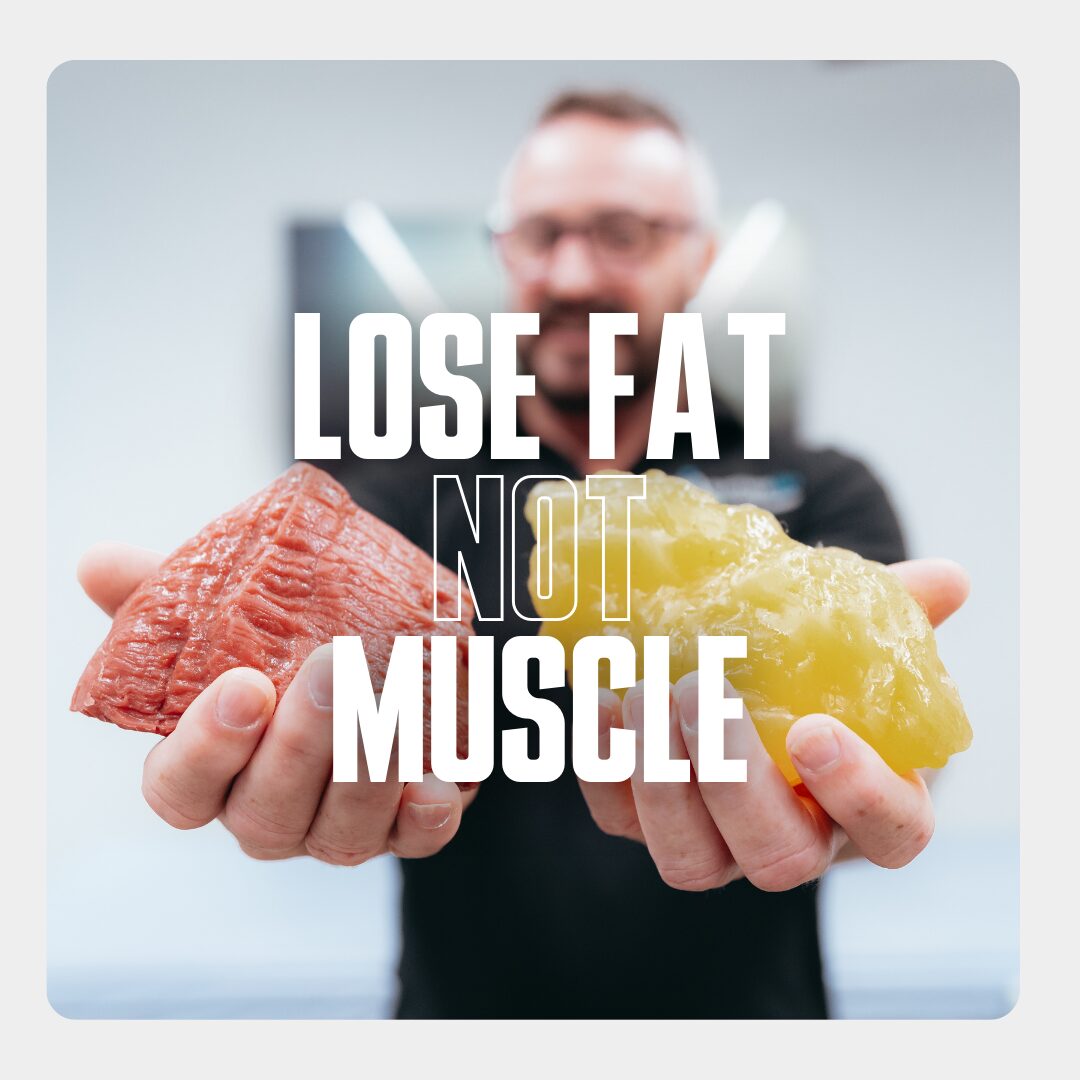
Ever stepped on the scale, felt proud, then realised you look and feel worse? That is the problem with chasing weight loss instead of body composition.
Scientific Insight:
When you diet, your body does not only pull energy from fat stores. If the deficit is too aggressive, protein is too low, or strength training is missing, you can lose valuable lean mass along the way. That matters because lean mass supports strength, performance, and metabolic health. A 2024 systematic review and meta-analysis found that increasing protein intake during weight loss significantly helps prevent muscle mass decline in adults with overweight or obesity.
Training is the other half of the equation. Resistance exercise gives your body a clear message: keep the muscle. A 2025 systematic review and meta-analysis on resistance exercise during dietary weight loss supports resistance training as a strategy that can help preserve lean mass while improving body composition.
This is where DEXA makes the process smarter. Instead of guessing from scale weight, DEXA gives a clear snapshot of fat mass, lean mass, and bone health. A 2024 clinical review describes DEXA as a gold-standard method for body composition analysis. DEXA can also estimate visceral fat, which is important because visceral fat is more closely linked to cardiometabolic risk than subcutaneous fat. Studies show DEXA is useful to track visceral fat changes over time, especially when you keep your testing conditions consistent.
Practical Takeaway:
Aim for a moderate calorie deficit, lift weights 2 to 4 times per week with progressive overload, and keep protein consistently high. Then use DEXA to confirm what is actually changing. If fat mass is dropping while lean mass holds steady, you are on the right track. If lean mass is falling fast, you can adjust early instead of wasting months.
References:
Kokura, Y., Ueshima, J., Saino, Y., & Maeda, K. (2024). Enhanced protein intake on maintaining muscle mass, strength, and physical function in adults with overweight/obesity: A systematic review and meta-analysis. Clinical nutrition ESPEN, 63, 417–426. https://doi.org/10.1016/j.clnesp.2024.06.030
Binmafoz A, Dighriri A, Gray C, Gray SR. Effect of resistance exercise on body composition, muscle strength and cardiometabolic health during dietary weight loss in people living with overweight or obesity: a systematic review and meta-analysis. BMJ Open Sport & Exercise Medicine. 2025;11:e002363. https://doi.org/10.1136/bmjsem-2024-002363
Kim TN. Use of dual-energy x-ray absorptiometry for body composition in chronic disease management. Cardiovasc Prev Pharmacother. 2024;6(4):128-134.
Ashby-Thompson, M., Heshka, S., Rizkalla, B., Zurlo, R., Lemos, T., Janumala, I., Goodpaster, B., DeLany, J., Courcoulas, A., Strain, G., Pomp, A., Kang, P., Lin, S., Thornton, J., & Gallagher, D. (2022). Validity of dual-energy x-ray absorptiometry for estimation of visceral adipose tissue and visceral adipose tissue change after surgery-induced weight loss in women with severe obesity. Obesity (Silver Spring, Md.), 30(5), 1057–1065. https://doi.org/10.1002/oby.23415
Murata, H., Yagi, T., Midorikawa, T., Torii, S., Takai, E., & Taguchi, M. (2022). Comparison between DXA and MRI for the Visceral Fat Assessment in Athletes. International journal of sports medicine, 43(7), 625–631. https://doi.org/10.1055/a-1717-1619