

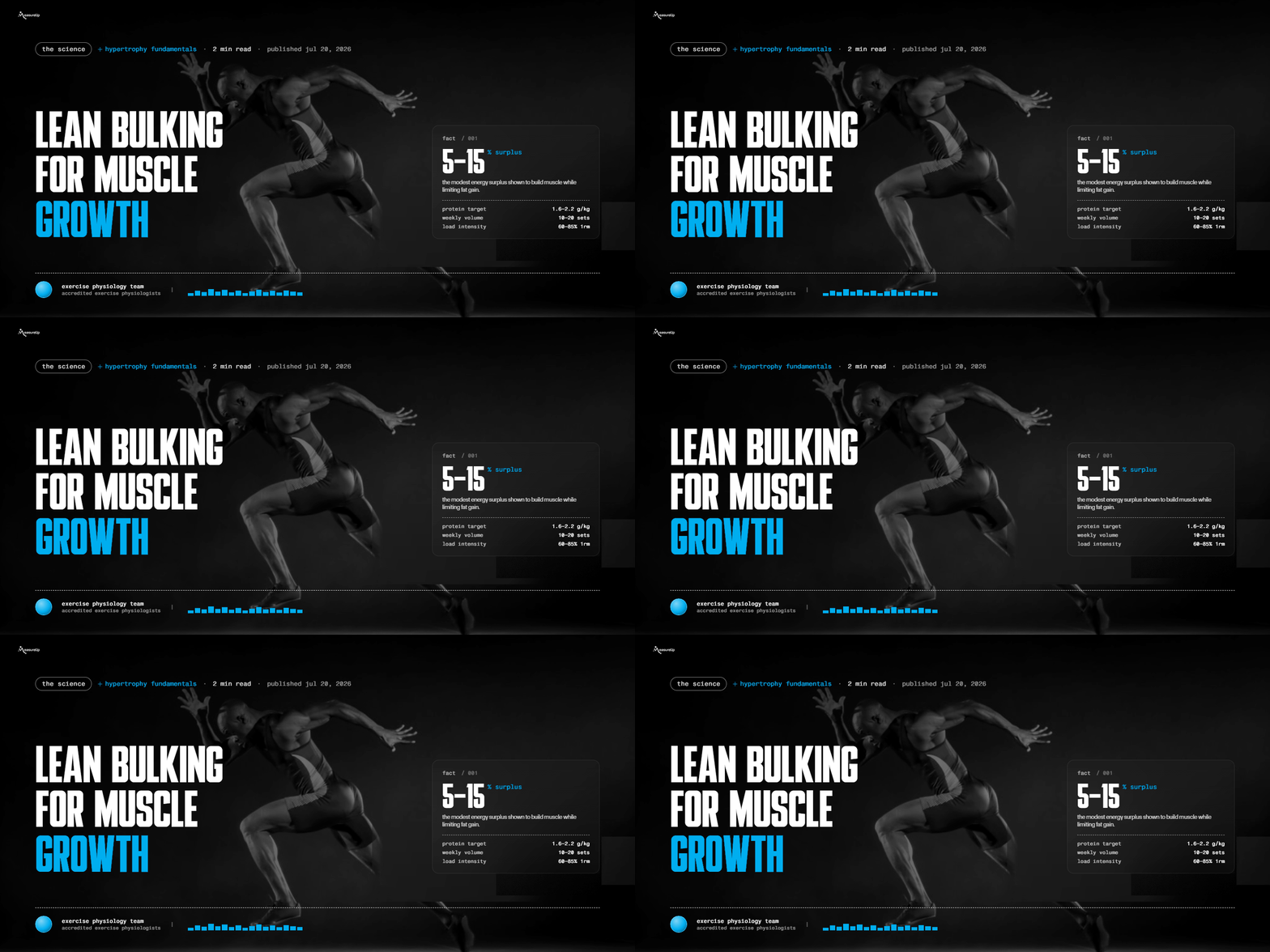
Lean bulking is a smart way to build muscle without piling on fat. Instead of eating as much as possible, you eat just a little more than you burn. Then, you pair that small surplus with regular strength training and enough protein. Research shows this approach works well. In fact, muscle grows efficiently even with a modest rise in calories, so you avoid unnecessary fat gain (Iraki et al., 2019).
How Many Calories Do You Need?
For most trained people, a daily surplus of about 5–15% above maintenance is enough. Faster weight gain often adds more fat than muscle, so it pays to go slow. In other words, patience protects your progress.
Protein: The Key Nutrient
Protein is central to lean bulking. Meta-analyses suggest that 1.6–2.2 grams per kilogram of body weight each day supports optimal muscle repair (Morton et al., 2018; Nunes et al., 2022). For best results, spread this protein across 3–5 meals. This way, your body gets a steady supply of amino acids to build new muscle throughout the day.
Carbs, Fats, and Supplements
Carbohydrates fuel your workouts and support recovery. Most lifters do well with 3–7 grams per kilogram per day, depending on training volume. Meanwhile, fat should make up 20–35% of total calories, since it supports hormone production and overall health (Iraki et al., 2019). Additionally, creatine monohydrate (3–5 grams daily) is the most well-supported supplement for boosting strength and muscle gains.
Training for Muscle Growth
Training drives muscle growth more than anything else. Aim for 10–20 sets per muscle group each week, using loads of 60–85% of your one-rep max. Also, train each muscle group 2–3 times per week for the best results (Schoenfeld et al., 2017). Most sets should be taken close to failure, leaving 0–3 reps in reserve. This helps recruit more muscle fibres and maximises the growth stimulus.
Recovery Matters Too
Muscle doesn’t grow during your workout; it grows afterward, while you rest. So, aim for 7–9 hours of sleep each night to support this process fully.
The Bottom Line
In short, lean bulking isn’t about eating more. It’s about eating and training in a precise way that matches how quickly muscle can actually be built. When you combine a small calorie surplus, enough protein, and progressive resistance training, you create the ideal conditions for lean muscle gain, without the unwanted fat.
References (APA 7th)
Iraki, J., Fitschen, P., Espinar, S., & Helms, E. (2019). Sports, 7(7), 154.
Morton, R. W., et al. (2018). British Journal of Sports Medicine, 52(6), 376–384. https://doi.org/10.1136/bjsports-2017-097608
Nunes, E. A., et al. (2022). Journal of Cachexia, Sarcopenia and Muscle, 13(2), 795–810. https://doi.org/10.1002/jcsm.12922
Schoenfeld, B. J., et al. (2017). Sports, 7(7), 154.


