
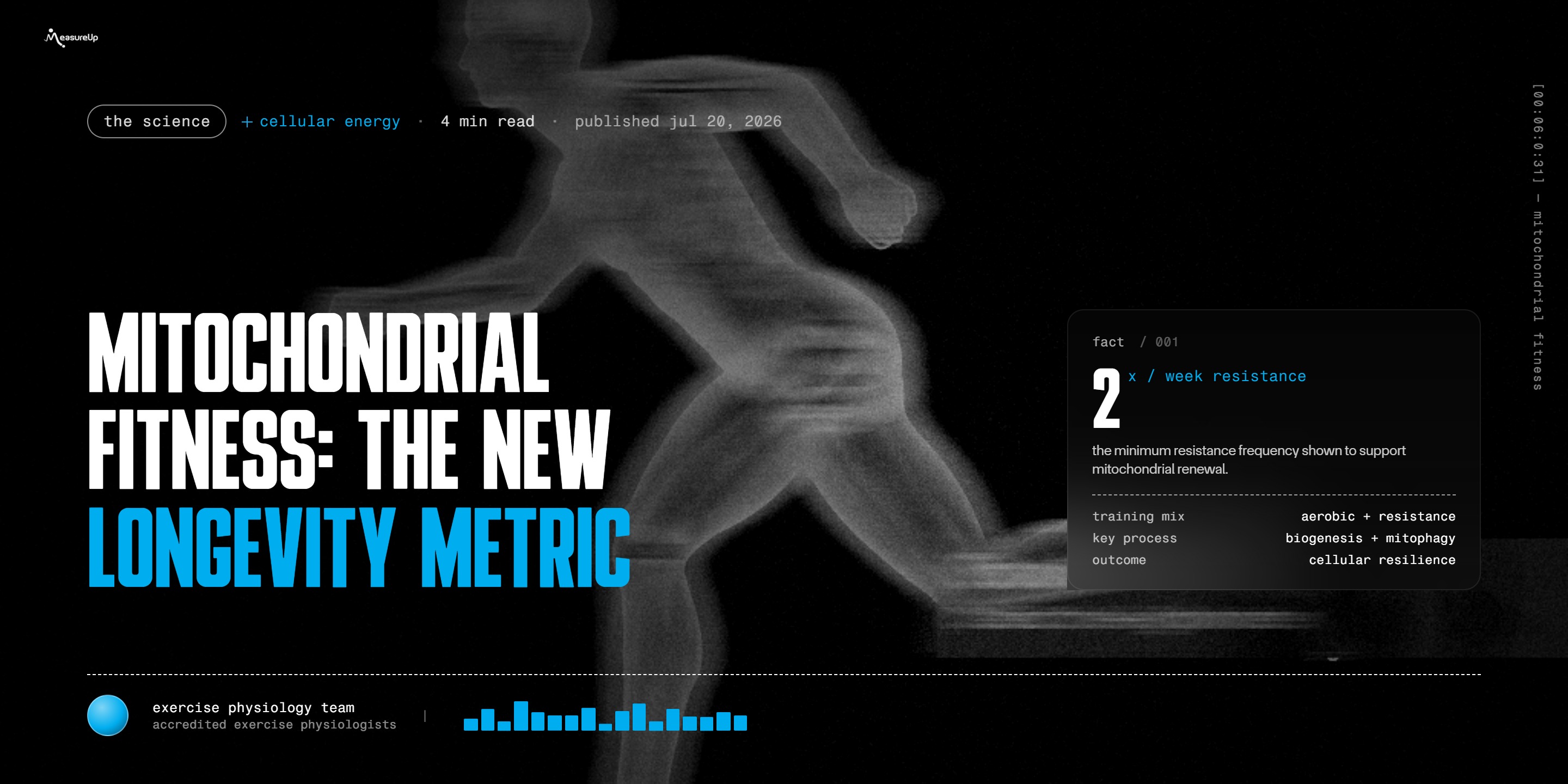
Before you blame ageing for your low energy, take a look somewhere deeper: inside your cells. Tiny structures called mitochondria produce the energy that powers everything you do, from climbing stairs to bouncing back after exercise. Increasingly, scientists see mitochondrial health as one of the clearest signs of how well we age.
The Little Engines That Could
Mitochondria are often called the body’s “powerhouses,” but they do far more than make energy. They also help regulate metabolism, manage inflammation, and control how well our cells cope with physical stress. As we age, mitochondrial function naturally declines. In turn, this decline contributes to less muscle mass, lower aerobic fitness, and weaker metabolic health. However, this decline isn’t set in stone. In fact, research shows mitochondria stay highly adaptable throughout life and respond well to regular physical activity (Memme et al., 2021).
How Exercise Renews Your Mitochondria
Exercise sends a powerful signal for mitochondrial change. Both aerobic and resistance training encourage your body to build new mitochondria, a process called mitochondrial biogenesis. At the same time, exercise improves your body’s ability to clear out damaged mitochondria, known as mitophagy. Together, this ongoing cycle of renewal helps keep your cells efficient and adaptable as you age. Notably, a recent review in Annual Review of Physiology (Hood et al., 2019) found that regular exercise helps maintain healthy mitochondrial networks and may even partly reverse age-related mitochondrial decline.
The Link to Longevity
Mitochondrial fitness is also closely tied to how long, and how well, we live. Healthy mitochondria help your body use oxygen, regulate blood sugar, and support muscle function. All of these factors lower your risk of chronic disease and early death. Moreover, emerging evidence suggests that mitochondrial quality control, meaning your body’s ability to repair, recycle, and replace mitochondria, may be a key reason exercise supports healthy ageing (Nilsson & Tarnopolsky, 2019).
The Simplest Intervention Still Wins
Importantly, mitochondrial health doesn’t come from a single supplement or biohacking trend. Instead, the most effective intervention remains surprisingly simple: regular exercise. Aerobic training improves mitochondrial density and function, while resistance training supports adaptations that help preserve muscle health and metabolic resilience (Lefferts et al., 2022). Together, these two forms of exercise offer a powerful stimulus for lifelong cellular health.
Don’t Cell Yourself Short: Act Now
If you’re aiming for longevity, think beyond calories burned or kilograms lifted. Instead, aim for a mix of regular aerobic exercise, resistance training at least two days a week, and enough recovery. Every workout sends a signal to your cells to become stronger, more efficient, and better prepared for the years ahead. After all, longevity isn’t just about adding years to life, it’s about adding life to those years. By supporting your mitochondrial fitness, you’re investing in the energy, resilience, and vitality that make healthy ageing possible.
References
Hood, D. A., Memme, J. M., Oliveira, A. N., & Triolo, M. (2019). Maintenance of skeletal muscle mitochondria in health, exercise, and aging. Annual Review of Physiology, 81, 19–41. https://doi.org/10.1146/annurev-physiol-020518-114310
Lefferts, W. K., Davis, M. M., & Valentine, R. J. (2022). Exercise as an aging mimetic: A new perspective on the mechanisms behind exercise as preventive medicine against age-related chronic disease. Frontiers in Physiology, 13, 866792. https://doi.org/10.3389/fphys.2022.866792
Memme, J. M., Erlich, A. T., & Hood, D. A. (2021). Exercise and mitochondrial health. The Journal of Physiology, 599(3), 803–817. https://doi.org/10.1113/JP278853
Nilsson, M. I., & Tarnopolsky, M. A. (2019). Mitochondria and aging—The role of exercise as a countermeasure. Biology, 8(2), 40. https://doi.org/10.3390/biology8020040